

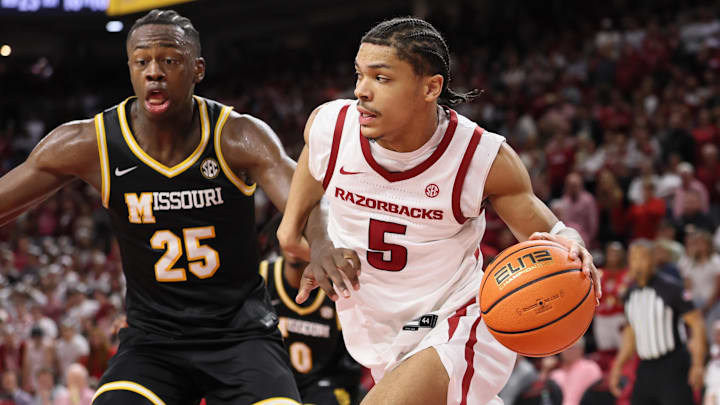
As March approaches and the calendar flips through the shortest month of the year, the conversation around college basketball intensifies. With Selection Sunday drawing closer, bracket projections are becoming clearer, and for Arkansas Razorbacks fans, there’s plenty to discuss.
One of the most trusted voices in bracket forecasting, Joe Lunardi of ESPN, has released his latest projections, and he currently slots Arkansas Razorbacks in as a No. 5 seed in the upcoming NCAA Division I Men's Basketball Tournament. That placement aligns closely with Arkansas’ standing in the AP Top 25, where they sit at No. 20 nationally.
Arkansas Draws 12-Seed Yale in Early NCAA Tournament Projection
A No. 5 seed feels like the right range for Arkansas at this stage of the season. Lunardi’s projection reflects both the Razorbacks’ résumé and their potential. Still, the margin is thin. A strong finish could solidify that 5-seed, or even bump them slightly higher, while a shaky close might slide them toward a 6 or 7 seed. As always, February and early March results carry major weight.
With postseason play looming, every game matters.
In Lunardi’s latest bracket, Arkansas would face No. 12 seed Yale Bulldogs, projected as the automatic qualifier from the Ivy League. On paper, that may look favorable, but history says otherwise.
The 5 vs. 12 matchup is notorious for upsets in March Madness. Ivy League teams, in particular, have developed a reputation for slowing games down and forcing opponents into uncomfortable half-court battles. In a one-and-done format, failing to adjust quickly can end a season in 40 minutes.
Since 2014, Yale has made five NCAA Tournament appearances, posting a 2–5 record over that stretch. Their highest seed during that span was a 12, with their lowest being a 14. While they haven’t advanced past the second round in those trips, they’ve shown the ability to compete, and surprise.
Why Yale Could Be Dangerous
This year’s Yale team is built around its front-court, which could present challenges for Arkansas, an area that has been inconsistent for the Razorbacks to defend at times this season.
Leading the way is forward Nick Townsend, a versatile presence averaging 16.5 points, 7.6 rebounds, and 4.2 assists per game. He’s the type of do-it-all forward who can stretch defenses, facilitate offense, and crash the boards.
Alongside him is 6-foot-10, 240-pound center Samson Aletan, a physical interior presence averaging 6.1 rebounds and 1.5 blocks per contest. Both players rank among the top five rebounders in the Ivy League and anchor a Yale frontcourt that prides itself on toughness and efficiency.
Currently sitting at 21–4 and first in the Ivy League standings, Yale is playing confident basketball. If they continue building momentum into March, they could become one of those “sneaky” mid-major teams no high seed wants to see.
Under head coach John Calipari, Arkansas has shown flashes of high-level potential. Calipari’s tournament experience alone gives the Razorbacks an edge in preparation and adjustments. But as every March reminds us, seeding guarantees nothing.
If Arkansas plays its game; pushing tempo, defending with intensity, and controlling the glass, they should have the talent advantage. However, if they struggle to adapt to a slower, more methodical pace, Yale’s disciplined style could create problems.
 Add us as a preferred source on Google