

As Arkansas head coach Ryan Silverfield prepares for his first season in Fayetteville in 2026, one of the biggest questions surrounding the program has been what his offense will look like and whether he would be willing to adapt his scheme to the personnel.
In a recent interview circulating on Twitter, Silverfield gave an answer that immediately resonated with Arkansas fans and players alike.
"“Any head coach that’s not willing to change their scheme based off personnel is… shame on them. It’s about their ego.”"Ryan Silverfield
"Any head coach that's not willing to change their scheme based off personnel is... shame on them. It's about their ego."
— Courtney Mims (@MimsCourtney) December 13, 2025
A great quote from Arkansas head football coach Ryan Silverfield from my interview with him yesterday. #WPS
Here's the full clip of him talking about his… pic.twitter.com/7wygLb4mMC
It was a blunt, honest response and arguably the best answer he could have given. In an era where some coaches stubbornly force players into rigid systems, Silverfield made it clear that player strengths, not coaching ego, will drive Arkansas’ offense.
A Philosophy Backed by Proof, Not Just Words
Before Silverfield even finished answering the question, the reporter noted that during his time at Memphis, his offenses showed year-to-year flexibility, sometimes pass-heavy, sometimes run-focused, depending on personnel. That observation essentially answered the question for him.
The numbers back it up.
2025 Memphis Offense (Run-Heavy)
- 420 total yards per game (Top 35 nationally)
- 34.6 points per game (Top 20)
- 2,815 passing yards
- 2,233 rushing yards (39th)
- 34 rushing touchdowns (6th nationally)
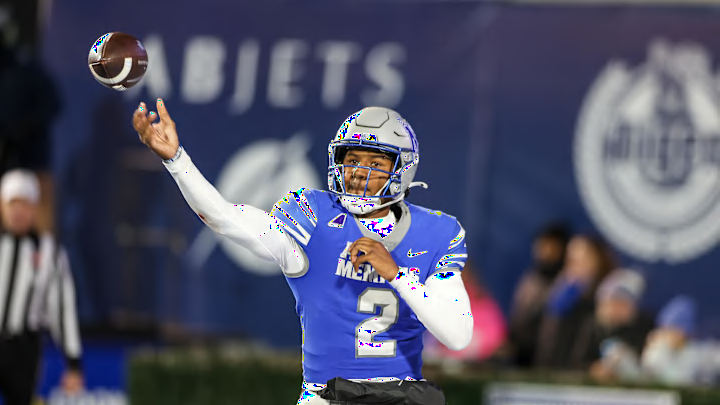
With a new quarterback in Brendon Lewis, a true dual-threat, Memphis leaned into the run game and maximized Lewis’ mobility rather than forcing a pass-heavy approach.
2024 Memphis Offense (Pass-Heavy)
- 270.5 passing yards per game (20th nationally)
- 25 passing touchdowns
- 174.1 rushing yards per game
- 33 rushing touchdowns
- 35.7 points per game (Top 12 nationally)
That season, Memphis was led by Seth Henigan, a four-year starter and pocket passer who thrived in a more traditional passing attack. Silverfield adjusted accordingly and the offense remained explosive.
Adaptability Is the Common Thread
Different quarterbacks. Different strengths. Same result: elite offensive production.
That’s exactly what Silverfield was referencing in his quote. When Henigan was under center, the offense flowed through the air. When Lewis took over, the scheme shifted toward a physical, run-first identity. In both cases, Memphis thrived.
Silverfield didn’t ask his players to become something they weren’t, he built the offense around what they did best.
Why This Matters for Arkansas
For Arkansas, this philosophy is refreshing and encouraging. It signals an offense that will evolve with its roster rather than fight against it. Players can expect to be put in positions to succeed, while fans can expect creativity, balance, and adaptability. That mindset will attract players who want to be developed and could make a significant difference with future recruits and transfer targets.
One thing is already clear: Silverfield’s offenses don’t have a single identity, they have a standard. And that standard is production. If his track record at Memphis is any indication, Arkansas football is heading toward an offense that’s not just flexible but dangerous.
 Add us as a preferred source on Google