

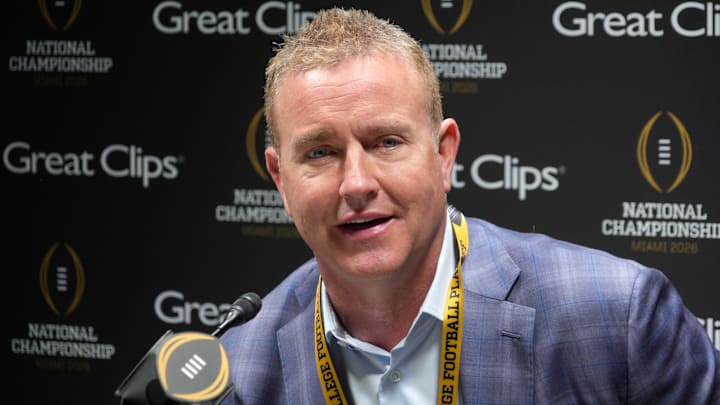
National college football analyst Kirk Herbstreit recently appeared on the popular YouTube platform Crain & Cone to discuss a pressing issue in the sport: how to fix college football. Among debates over targeting penalties, too many commercials during games, and playoff expansion, one topic stood out above the rest, the college football calendar.
For new head coach Ryan Silverfield, this is likely a challenge he can attest to firsthand.
Kirk Herbstreit Dissects College Football’s Broken Calendar
Herbstreit highlighted what many coaches quietly admit: the current college football calendar is chaotic and unsustainable. From early signing periods to the transfer portal opening while teams are still preparing for bowl games or playoff appearances, coaches are forced into impossible situations.
"All the coaches want it changed," Herbstreit emphasized, before asking the obvious question: why hasn’t it been fixed?
Part of the hesitation lies with the NCAA, which fears litigation if major structural changes are implemented. Conference leadership isn’t a perfect solution either. Herbstreit noted that someone like Greg Sankey, commissioner of the SEC, represents only a single league, meaning his perspective may prioritize conference interests over the sport as a whole.
The result? Gridlock.
The NFL as a Blueprint
Herbstreit suggested that college football could take lessons from the NFL, which operates on structured timelines with clear windows for coaching hires, free agency, and roster changes.
For example, Klint Kubiak, offensive coordinator of the Seattle Seahawks, was linked to the Las Vegas Raiders head coaching job. In the NFL, teams must wait until the season ends before finalizing such moves, preventing mid-playoff chaos and allowing coaches to finish what they started.
Herbstreit’s core belief: if a coach signs on for a season, they should be present for the full season, without constantly worrying about recruiting calendars, transfer windows, or staff-building deadlines overlapping with championship pursuits.
College football’s current system creates pressure points that the NFL avoids. Coaches hired mid-season risk falling behind in:
- Transfer portal recruiting
- High school recruiting cycles
- Coaching staff construction
- Player retention and development
With the portal opening while playoff races are still underway, coaches often feel compelled to shift focus early, even if their current team is competing for meaningful games. Often coaches don't get a real grasp of the team and the operations until year 2 of their tenure.
The scenario happened this past season with Lane Kiffin leaving Ole Miss for LSU during a College Football Playoff run. Even the perception of such a move highlights the flaw: coaches fear falling behind at their next stop if they don’t immediately begin roster construction. This dynamic can harm both programs, the one being left and the one being joined.
Ryan Silverfield Understands the Pressure
For Ryan Silverfield, stepping into a new role meant juggling recruiting visits, portal evaluations, staff decisions, and player retention, all while other programs were still playing meaningful games.
Herbstreit believes this is the reality that needs reform. Coaches are forced to split focus during critical stretches of the season, managing future employment logistics and roster turnover instead of solely preparing for bowl games or playoff matchups.
Herbstreit’s message was clear: college football needs structure.
A standardized calendar, similar to the NFL’s, where transfer windows, hiring cycles, and roster movement are aligned after the season, would reduce pressure on coaches and protect competitive integrity.
Until that happens, coaches will continue navigating overlapping timelines that impact not only their careers but also the players and programs they lead. This should be priority number one for college football moving forward in order to create a more sustainable environment for players and coaches before it get's even worse.
 Add us as a preferred source on Google