

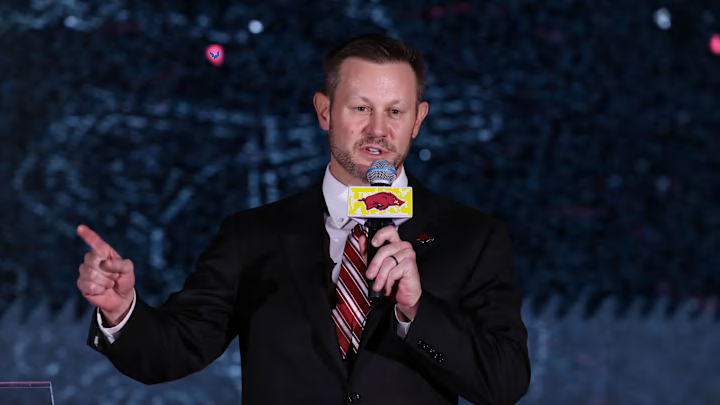
Ryan Silverfield’s first major quarterback move at Arkansas wasn’t too flashy, immediate, or cheap but most definitely a bold one.
The Razorbacks have officially secured a commitment from four-star quarterback Hank Hendrix, convincing the highly touted prospect to reclassify to the 2026 class and shut down his recruitment. It’s a significant win for Silverfield and his staff, but one that comes at a steep and somewhat unconventional cost.
Hank Hendrix: The Expensive Future For Razorbacks Football
Multi-year NIL contracts for high school prospects remain rare in college football, and even more so when the player in question is just 16 years old. According to The Athletic’s Sam Khan Jr. and Antonio Morales, only about 5 percent of high school recruits sign multi-year deals. Quarterbacks typically command more, but the numbers still provide important context.
The baseline NIL rate for a Power Four quarterback signee generally falls between $100,000 and $300,000. Five-star prospects often push that figure into the $750,000 to $1 million range. One 2026 quarterback ranked inside the national top 150, and not expected to start right away, is reportedly earning between $300,000 and $400,000.
By those standards, Arkansas is clearly paying a premium for Hendrix. Viewed another way, the Razorbacks are paying a higher price upfront for the chance at future production that could ultimately outweigh the cost, similar to how MLB teams invest early in elite young minor-league talent.
That premium, however, makes sense when viewed through the lens of retention and long-term planning. Keeping Hendrix in Fayetteville, and away from future bidding wars, was a priority. Still, with Silverfield engineering a major roster rebuild and emphasizing immediate competitiveness, shelling out roughly $1 million for a quarterback who likely won’t see the field until 2027-2028 raises reasonable questions.
The problem? Short-term fixes were never realistic with the state of the program when Silverfield came in.
According to ESPN’s Pete Thamel, the going rate for Power Four starting quarterbacks in the transfer portal now sits between $1.5 million and $3.5 million, with elite options commanding even more. Texas Tech reportedly paid $5 million to land Cincinnati transfer Brendan Sorsby, while Miami and Ole Miss both made $6 million offers to Alabama quarterback Ty Simpson before his decision to head to the NFL.
Arkansas’ financial footing has improved during the transition from Sam Pittman to Silverfield, but those figures remain well outside the Razorbacks’ comfort zone for the time being.
Instead, Hendrix’s deal represents a different kind of luxury and that being time which is on coach's side.
Arkansas Is Taking a New Approach to Roster Building
Arkansas is effectively paying for patience, development, and continuity. The staff appears more than comfortable allowing Hendrix to grow physically and mentally, learning the system without the immediate pressure to perform. In an era defined by instant gratification, that approach stands out.
The message is clear: this isn’t about quick returns. It’s about belief.
Silverfield currently has enough viable quarterback options to remain competitive in the short term, allowing this move to function exactly as intended, an investment. The strategy mirrors what programs like Oregon have done in recent years, paying high-level money to backup quarterbacks with starter upside, trusting that proper development will eventually bring the investment full circle.
If Arkansas gets this right, the payoff could be substantial.
For Razorback fans, the takeaway is simple: get used to Hank Hendrix. If everything breaks the right way, he may be a program lifer, and potentially one of the better quarterbacks Arkansas has seen in quite some time.
 Add us as a preferred source on Google